


By the time your last event wrapped up, your team probably had hundreds of check-ins, booth scans, and chat logs waiting to be sorted.
Each one is a clue, a small sign of what caught someone’s attention, what they skipped, and where the real interest was.
But most of those clues never get used. In fact, across many organizations, between 60% and 73% of collected data goes unused for analytics. And that’s the real issue for event marketing teams today. It’s not that engagement is missing, but it rarely translates into measurable outcomes like higher registrations, stronger return visits, or lower acquisition costs.
That’s where the real opportunity lies.
Over the past year, event teams, including our own clients, have started turning this untapped attendee intelligence into personalized outreach that feels less like marketing and more like connection. And as a result, they get higher engagement, stronger pipelines, and faster conversions.
In this post, we’ll show you how that shift happens. You’ll see how to capture richer attendee signals, qualify leads with intent, and turn them into outreach that drives measurable results.
Why personalization is now a business necessity
That disconnect, between the signals we collect and the actions we take, is exactly why personalization matters more than ever. Audiences no longer respond to one-size-fits-all follow-ups. They’ve attended sessions, shared feedback, downloaded resources, and shown you what they care about, and they expect the next message they receive to reflect that.
The opportunity is huge. According to the B2B Marketing Report (2024), 41% of marketing leaders view events as a critical part of their demand generation strategy, while another 33% rank them among their most valuable channels. Yet only 37% of marketers measure ROI across channels, according to Nielsen’s 2024 Annual Marketing Report. That gap shows how often the potential of event data goes untapped.
A more intentional approach to personalization can close that gap. When post-event communication is tailored to what people actually engaged with, whether that’s a session topic, a poll, or a conversation, leads are nurtured faster, engagement lasts longer, and opportunities move more smoothly through the pipeline.
Many event teams are already shifting their strategies in this direction. If you’d like to see how they’re doing it, here’s a useful resource: Why 72% of event teams are turning to AI to boost engagement.
Data is everywhere, but insight is nowhere
Everyone agrees on the potential of personalization. The real challenge is execution. Events leave behind a rich trail of data, from registrations and session check-ins to downloads, polls, and chat interactions, but too much of it remains siloed across platforms, disconnected from the outreach that could turn it into results.
According to Cvent’s Mobile Event App Benchmark Report, event app adoption now averages around 63%, a number that continues to rise each year. Yet even with that growth, valuable signals such as session clicks, content views, or poll interactions are rarely used to guide follow-ups. The result is a missed opportunity: engagement happens, but it’s not converted into meaningful next steps.
The gap is clear in the data. A 2025 Remo survey found that 89% of marketing decision-makers see personalization as critical to future success, but most also admit they aren’t making full use of the attendee information they already have. That disconnect between data collection and data activation is what limits the impact of most post-event campaigns.
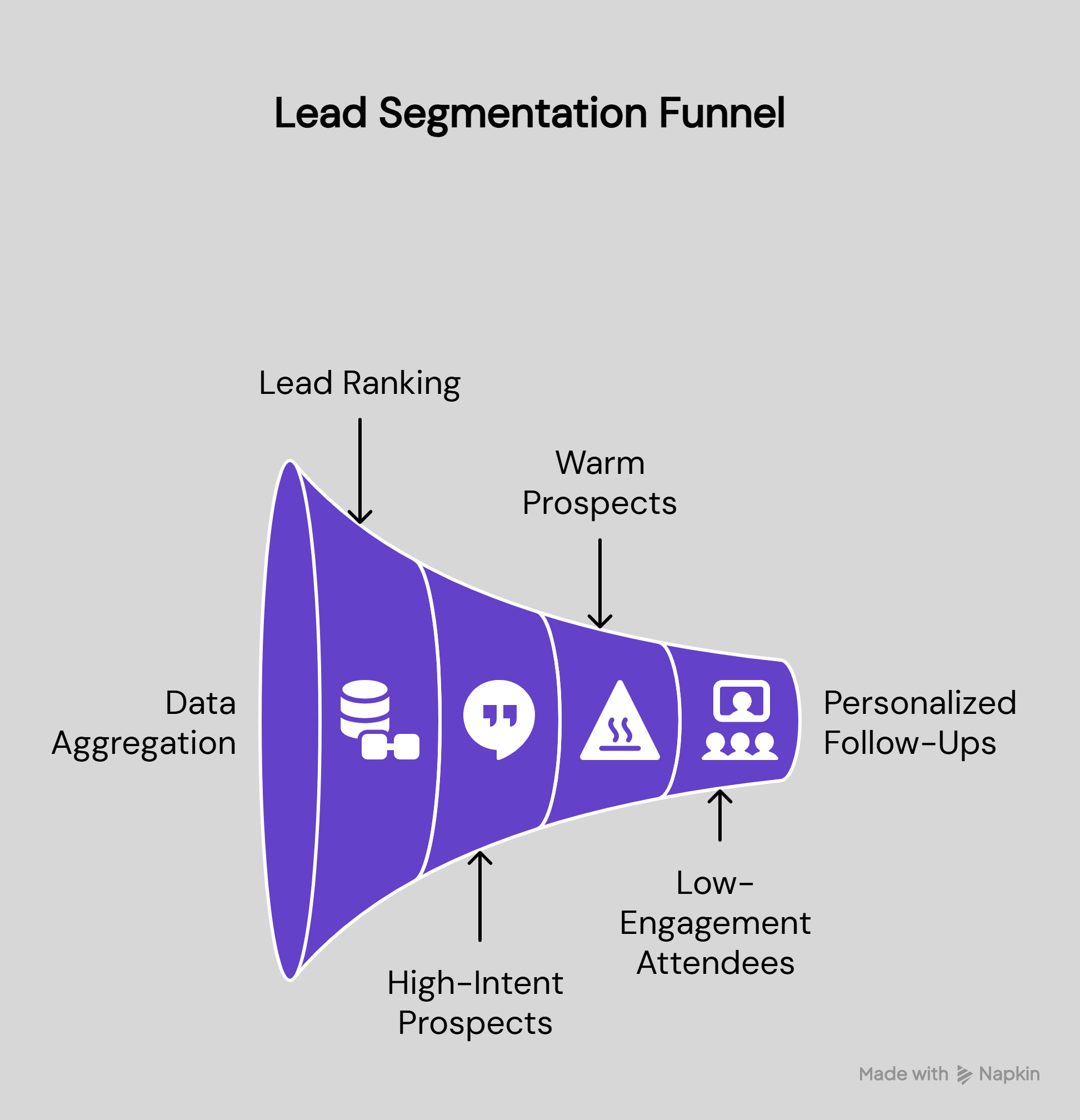
When all that information finally comes together in one place, patterns begin to appear. You can start to group attendees and leads based on how they showed up and interacted, whether they’re delegate prospects, SPEX (sponsor or exhibitor) prospects, or part of the audience data shared with sponsors:
Delegate prospects:
- High-intent delegates: professionals who attended multiple sessions or downloaded detailed resources.
- Warm delegates: those who interacted through chats, Q&As, or booth visits.
- Low-engagement delegates: passive participants who registered or joined but showed minimal engagement.
SPEX (Sponsor/Exhibitor) prospects:
- High-intent SPEX prospects: brands that explored sponsorship tiers, requested pricing, or attended partner meetings.
- Warm SPEX prospects: those who visited the sponsor zone, engaged with sales teams, or asked basic questions.
- Low-engagement SPEX prospects: companies that showed interest earlier (newsletter sign-ups, brochure downloads) but haven’t re-engaged yet.
Audience prospects (for SPEX sales):
- High-value prospects: delegates or companies that perfectly match a sponsor’s ICP (e.g., relevant industry, seniority).
- Warm prospects: participants who fit the target profile but showed limited engagement.
- Cold prospects: attendees outside the ICP or with little-to-no engagement, useful mainly for top-of-funnel retargeting.
Having this single, unified view of your audience becomes the foundation for every personalized follow-up that comes after.
Three principles to turn attendee data into conversions
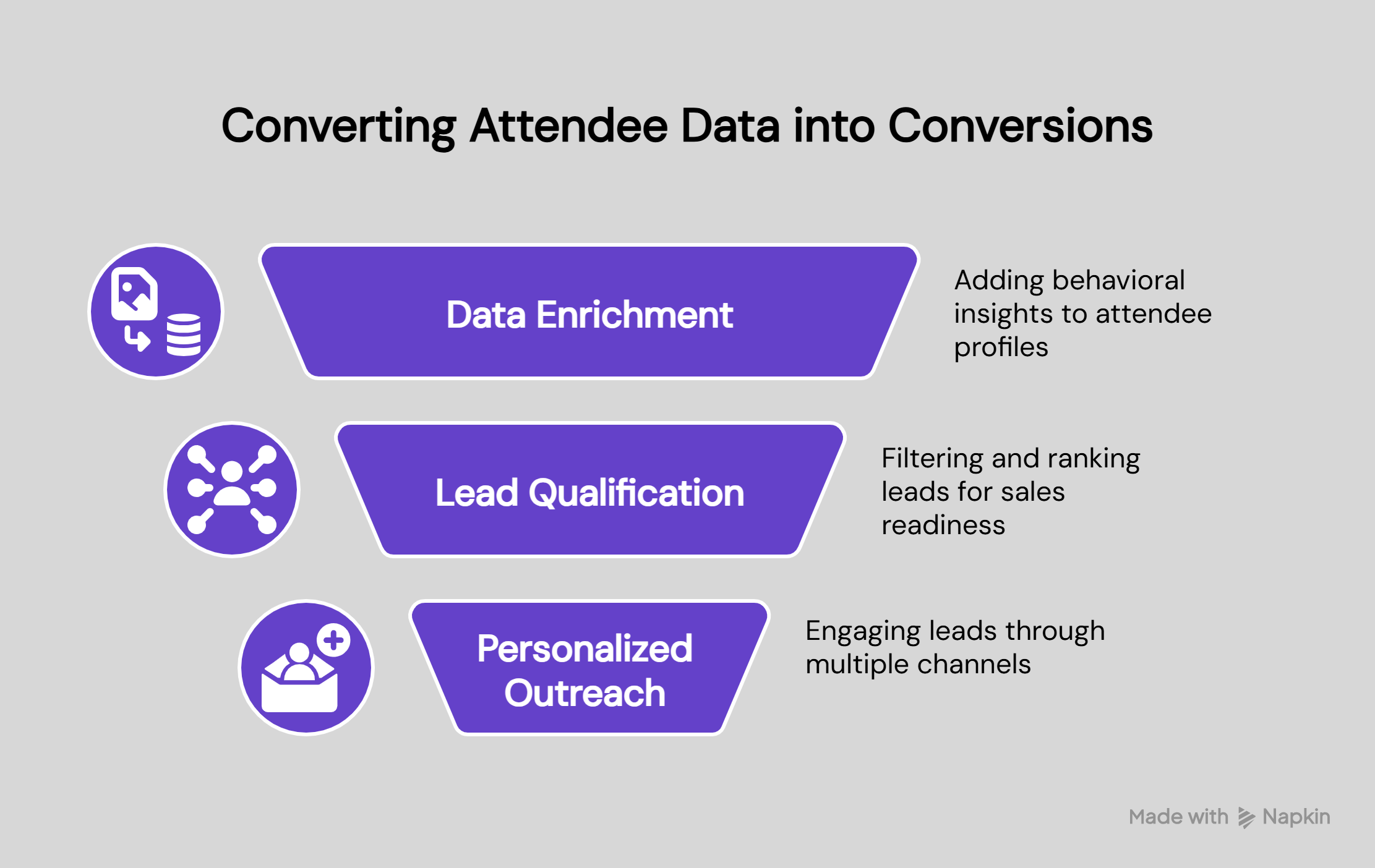
Once you understand why so much valuable data goes unused, the next step is building a system that changes that. Turning raw attendee insights into measurable impact comes down to three strategic principles every event team should master. These principles work whether you’re using advanced automation or simple manual workflows.
1) Activate personalised journeys across channels
Create a personalised experience that helps attendees discover what’s most relevant to them and guides them naturally toward the next step, whether that’s exploring sessions, saving content, or completing registration. Meet attendees in the channels they already use and communicate in a clear, intuitive way.
The strongest results come when each interaction reflects where someone is in their journey. When touchpoints align with an attendee’s interests and behaviour, engagement feels helpful and contextual, not promotional, and progression happens organically.
2) Collect rich, actionable signals
Most teams capture basic details like name, title, and company, but those alone don’t reveal intent. The real value comes from behavioural signals that show what attendees care about and how engaged they are.
- Which sessions did they attend or bookmark?
- Did they interact with polls, Q&As, or resources?
- How did they move through the agenda or event site?
These signals provide meaningful insight into interests and intent. Even lightweight interactions, such as a poll response or a content click, can inform a more relevant and timely next step.
3) Qualify and prioritize intelligently
Once these signals are collected, the goal is to understand levels of intent, not to overcomplicate scoring. Grouping attendees based on engagement depth, topics of interest, or repeat interactions helps teams decide how to respond.
- Highly engaged attendees → deeper content, recommendations, or next-step prompts
- Moderately engaged attendees → curated follow-ups and contextual guidance
- Low-engagement attendees → simple re-entry points to encourage exploration
By prioritising attendees this way, teams focus on improving the experience for those most likely to take action, while still supporting broader engagement, without relying on guesswork.
How Bridged helps bring these principles to life
If you’re ready to operationalize the playbook above, here’s how Bridged can support each step. These are optional accelerators; the framework works regardless of the tools you use.
1) Activate personalized journeys across channels → Knowledge Agent
- Use your agenda, session content, FAQs, and resources to power an always-on event concierge that helps attendees discover what’s most relevant to them in real time.
- The Knowledge Agent enables seamless discovery across your website and owned channels, guiding attendees through sessions, content, and next steps while quietly capturing high-intent signals.
- The result is a clear, easy-to-navigate journey that increases engagement, supports organic intent growth, and improves conversion without adding friction.
2) Collect Rich, Actionable Signals → Polling Agent
- Launch lightweight polls, in-session questions, and feedback prompts without added dev work.
- Responses, content interactions, and behavioural signals are captured automatically and routed into your data stack, creating a richer picture of attendee interests and engagement.
- These signals strengthen attendee profiles and provide the foundation for more relevant follow-ups and journeys.
3) Qualify and Prioritise Intelligently → Qualification Agent
- Score attendees using engagement depth, topic affinity, and recency.
- Create sponsor-ready or sales-ready lists with transparent rules your team can edit.
- Sync prioritized segments to your CRM/marketing tools so reps start with the right names.
What These Principles Look Like in Action: The Informa Example
These principles are already shaping how some of the most forward-thinking organizations approach their events. One of the clearest examples of how they translate into measurable impact comes from Informa.
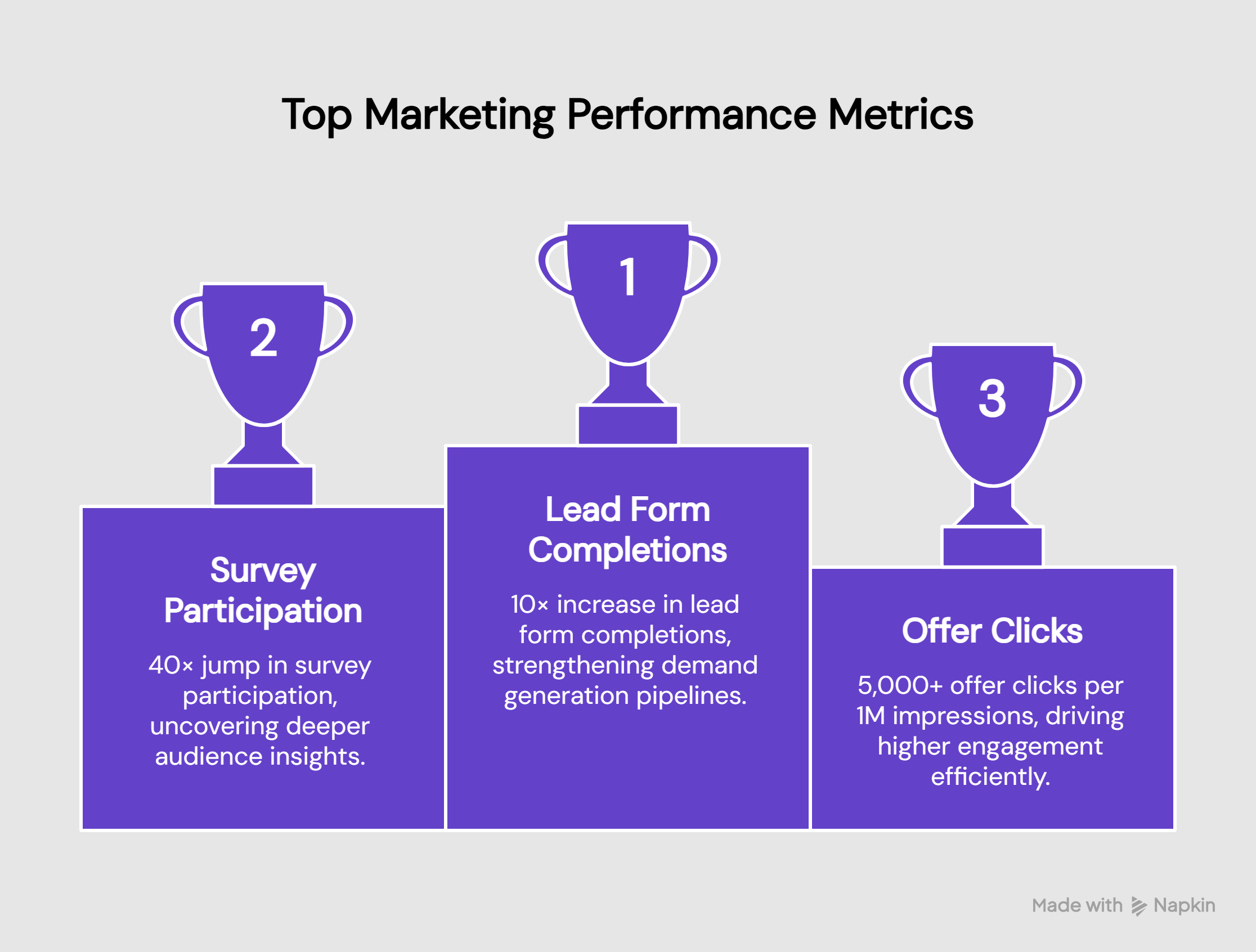
By focusing on richer attendee signals, intelligent lead prioritization, and personalized follow-ups across multiple channels, Informa completely reshaped its post-event engagement strategy. The results speak for themselves:
- 10× increase in lead form completions, creating stronger demand generation pipelines.
- 40× jump in survey participation, uncovering deeper audience insights for more targeted outreach.
- 5,000+ offer clicks per 1M impressions, driving higher engagement without increasing ad spend.
This success was built step by step, by making personalization a part of every interaction rather than an afterthought at the end.
Want to see how they did it? Download the full case study here for a deeper look at their process, challenges, and the steps they took to scale results.
Building your post-event personalization system
Tools can help you speed things up, but the foundation of successful personalization is still a solid system. Most event teams collect great data, but where they struggle is turning that data into a system that actually moves people forward. A personalization framework isn’t a complicated piece of software. It’s just a clear process that connects what you already know about your attendees to the next step you want them to take.
Step 1: Bring everything into one place
Before anything else, gather your signals. Registration info, session check-ins, booth scans, survey answers as they’re all useful, but only when they’re side by side. Most teams skip this part or do it too late. Having a single, simple view of who did what gives you the foundation to build real follow-ups.
Step 2: Sort people by how they showed up
Not every attendee deserves the same message. Some people were active in multiple sessions; others barely logged in. A basic scoring system, even just “high-intent,” “interested,” and “cold” is enough to know who needs what. The point isn’t perfect math; it’s to stop treating everyone like they’re at the same stage.
Step 3: Send something that feels meant for them
Once you know where people stand, talk to them like it. The most engaged group might be ready for a demo or a deeper conversation. Those who showed interest but didn’t act probably want more context, so send them guides or session highlights. And the ones who drifted away? A gentle nudge, maybe a short survey or quick offer, can bring them back.
Step 4: Let technology handle the busy work
You don’t need to automate everything, but a few well-placed triggers like a follow-up email when someone downloads content, and a message after a booth visit. All this keeps the momentum going without eating into your team’s time. The goal is consistency, not complexity.
Step 5: Keep score and adjust as you go
A strong system isn’t static. Track the outcomes that matter to marketing teams — registration uplift, organic traffic quality, and cost of acquisition. Review these signals regularly to understand which content, journeys, and discovery paths are driving intent, then refine what isn’t working. Over time, these incremental improvements compound into a faster, more efficient pipeline.
How to measure success from personalized outreach
Now, the final step is to make sure your post-event outreach is actually delivering results. To do this, track key metrics across your funnel and look for continuous improvement over time:
- Registration uplift from engaged users
Shows whether improved discovery and relevance are actually increasing conversion into registrations. - Return rate among content-interacting visitors
Indicates how well your content and experiences stick, and whether audiences see ongoing value in coming back. - Funnel progression speed
Measures how quickly engaged users move from exploration to action, helping identify friction in the journey. - Engagement depth before conversion
Reveals which interactions (sessions viewed, questions asked, resources accessed) correlate with higher-intent behaviour. - Sponsor ROI signals
Connects attendee engagement to sponsor-relevant outcomes, such as content interactions, offer clicks, or qualified audience segments, replacing vanity metrics with defensible value. - Operational efficiency over time
Tracks whether automation and better workflows are reducing manual effort while improving consistency and scale.
Tracking these KPIs helps you understand not just what worked, but why, so you can refine your personalization strategy and improve outcomes with every event.
For more strategies on keeping event content effective long after the event ends, check out this guide on making event content more discoverable. It’s a practical next step in turning post-event engagement into long-term value.
The takeaway
Most teams already have more than enough attendee data, the real difference comes from how you use it to start more relevant conversations. When follow-ups reflect what people actually cared about, conversations feel relevant and next steps happen naturally.
Start small: pick one event, segment attendees based on their actions, and send them messages that speak directly to those interests. You’ll see engagement rise, and with each iteration, the results will get stronger.
And if you’re ready to scale that approach across every event, Bridged can help you do it without adding complexity.
Good reads from Bridged
If you have come this far, you’ll probably enjoy a few more of our reads:
- How Your Event Sales Deck Isn’t the Problem, Your Buyer Signal Is
- How to Use Interactive Content to Improve Website Engagement
- Media Event Companies are Moving Away from Display Ads. What’s replacing them?
- European Union AI Compliance Act: A Guide for Event Marketing Teams
- How Terrapinn Is Turning AI Pilots into Scaled Impact
FAQs
- How fast can this system be deployed?
Using Bridged’s 3P+ framework, event teams typically go live within 4-6 weeks, achieving measurable ROI within one quarter. - Does this replace existing CRMs or event platforms?
No. Bridged integrates seamlessly with existing tools (over 100 integrations out-of-the-box), meaning no IT sprints or platform rebuilds. - How does the Knowledge Agent differ from standard chatbots?
It’s trained on your event’s data, agenda, and content, so it gives contextual, personalized responses across web, WhatsApp, and email, not canned scripts. - How can I personalise outreach if my attendee data is incomplete?
Start with the data you do have like session attendance, poll responses, or even basic registration info. Layer it with behavioural signals like website visits or email clicks. Even partial data can power effective segmentation and more relevant follow-ups. As you collect more, your outreach will naturally become more sophisticated. - What are some common mistakes teams make when personalising post-event outreach?
The biggest mistakes are sending follow-ups too late, treating all attendees the same, and focusing too much on sales rather than value. Outreach should feel like a continuation of the event conversation like timely, relevant, and tailored to each person’s level of engagement. - How soon after an event should personalized follow-ups go out?
Ideally, within 24 to 72 hours. Engagement drops sharply if you wait longer than a week. Use automation tools to trigger follow-ups quickly based on attendee actions while the event is still fresh in their minds. - Can personalized outreach improve sponsor ROI, too?
Absolutely. When attendee data is segmented well, sponsor offers can be targeted to the right audience segments, increasing relevance and conversions. Over time, this leads to stronger sponsor satisfaction and potentially higher renewal rates.